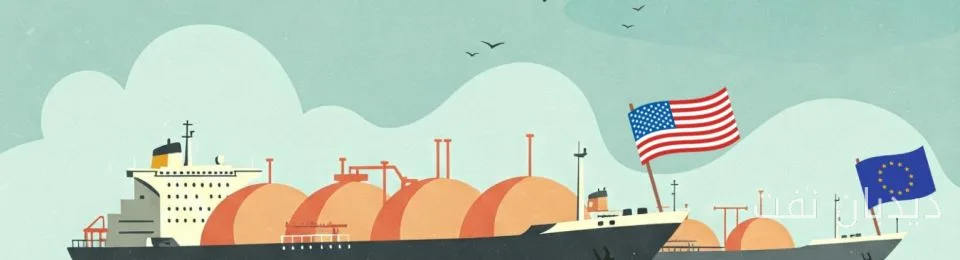
While trade agreements between the United States and the European Union seem like a positive step towards strengthening bilateral relations, the hidden realities surrounding U.S. liquefied natural gas (LNG) trade can present a different picture of these relations.
Economic and Political Complexities
Some experts believe that the transfer of liquefied natural gas to Europe is not straightforward. On one hand, there is a need for appropriate infrastructure to receive and distribute this gas in Europe, and on the other hand, issues related to pricing and competition with other energy sources pose significant challenges. This is while European countries are seeking to diversify their energy sources to reduce dependence on Russian gas.
Benefits and Threats
Given the political and economic uncertainties at the global level, liquefied natural gas trade can act as a powerful tool in the hands of producing and consuming countries. However, at the same time, this issue can lead to insecurity in the energy market. Additionally, there are concerns about the environmental impacts resulting from the extraction and transportation of gas that need to be given special attention.
Overall, while U.S. liquefied natural gas trade is presented as an opportunity to strengthen relations with the European Union, the complex challenges that exist along this path cannot be overlooked. Will this cooperation benefit both parties or lead to new tensions? The future will reveal.