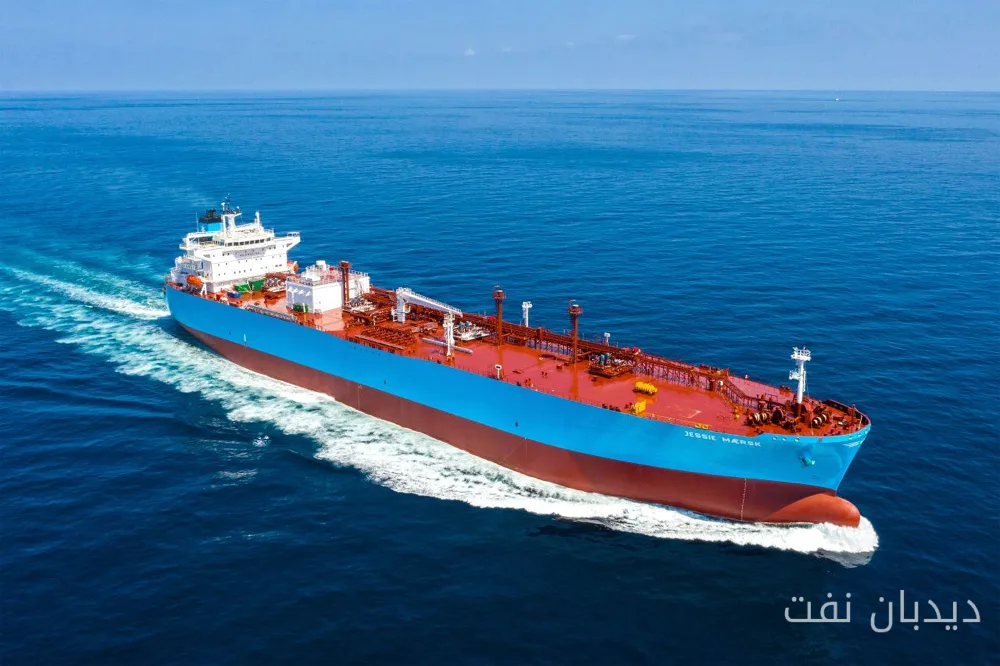
Maersk has conducted the first loading of a ship with 100 percent bioethanol in the United States. This operation took place at Houston Port and represents another step towards testing sustainable fuels in the company's dual-fuel fleet.
Loading Operation Details
The fuel was supplied by the American producer POET. POET is recognized as the largest producer of bioethanol in the world and provided this plant-based fuel for the trial. Additionally, Kirby Corporation collaborated in the marine loading and transportation of the fuel, while Houston Port provided infrastructure and port coordination. The United States Coast Guard also assisted in ensuring compliance with the necessary legal requirements for this operation.
Read more: Reuse of Oil Supply Vessels as Exploratory Refrigerators by Stefano Pastrovich
Potential of Bioethanol in the Shipping Industry
Emma Mazzari, Vice President of Energy Markets at Maersk, stated that bioethanol could significantly contribute to the future energy mix in shipping. She added that this fuel could provide a scalable option with lower greenhouse gas emissions, allowing the industry to be more flexible in moving towards low-carbon fuels.
POET produces over 3 billion gallons of bioethanol annually at 35 bioprocessing facilities and claims that existing infrastructure for production, transportation, and distribution could facilitate the wider use of this fuel in shipping.
Jeff Broin, founder and CEO of POET, said that the Houston trial demonstrates the potential to connect U.S. agricultural production to marine fuel demand. He added, "Seeing bioethanol produced in America move from the farm to a container ship at one of the largest ports in the country is an exciting moment for our industry."
POET announced that this trial has shown that bioethanol can be transitioned beyond its traditional role as a road fuel to large-scale marine applications.
Read more: China's Clean Technology Exports Prevented 374 Million Tons of Carbon Dioxide Emissions · Impact of ISO 14060 Standard on Transparency of Net Zero Goals in the Shipping Industry